EDITORIAL
Objective: To justify-both clinically and methodologically—the use of the developed set of rehabilitation ontologies and the formalized knowledge bases. This set of ontologies and knowledge bases supports clinical decision-making for stroke patients at all stages of rehabilitation.
Materials and methods. This study methodologically relies on an ontological approach to knowledge representation on the IACPaaS cloud platform. Structured knowledge bases were developed using clinical guidelines, rehabilitation standards, and the expertise of specialists from Vladivostok Clinical Hospital No. 1. Ontological models and knowledge bases were formalized using directed graphs in the IACPaaS environment which ensures independence between the population and updating of the knowledge base and the software code. Expert validation was conducted at every stage of development.
Results. A set of interconnected, formalized knowledge bases has been created and integrated into a cloud-based platform to support decision-making throughout the rehabilitation process. Since 2024, this system has been undergoing clinical trials in the medical rehabilitation department for neurological patients with central nervous system disorders at Vladivostok Clinical Hospital No. 1.
Conclusion. The proposed set of AI-based ontologies and knowledge bases offers formalized, intelligent support to multidisciplinary rehabilitation teams at every stage of patient management after a stroke. This set creates a methodological foundation for personalized rehabilitation that considers the requirements of the International Classification of Functioning (ICF) and clinical guidelines.
REVIEWS
Introduction. Type 5 Cardiorenal Syndrome (CRS-5) involves combined cardiac and renal dysfunction that occurs as part of a systemic process, mainly sepsis. Effective diagnosis and treatment of this condition in intensive care units presents continued challenges. Objective: To synthesize current evidence on the pathogenesis, diagnostic biomarkers, and therapeutic strategies for CRS-5 in critically ill adults.
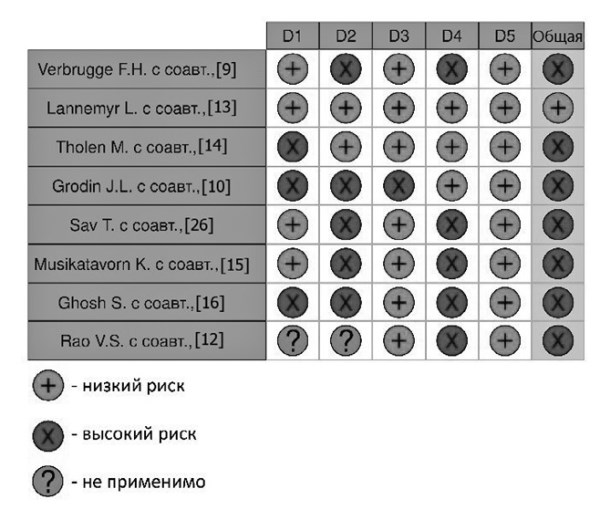
Materials and methods. This systematic review was conducted in accordance with the PRISMA guidelines. A search was performed in the PubMed, Embase, and Scopus databases from 2016 to 2025. Included were studies describing the CRS-5 phenotype, the diagnostic accuracy of biomarkers (NGAL – Neutrophil Gelatinase-Associated Lipocalin, KIM-1 – Kidney Injury Molecule 1, CCL14 – Chemokine (C-C motif) ligand 14), hemodynamic parameters (Central Venous Pressure, VExUS – Venous Excess UltraSound), and treatment outcomes in adult patients in the intensive care unit. A total of 25 publications were included in the final analysis of the 40 selected studies.
Results. NGAL demonstrated high sensitivity (88%) but low specificity (47%) in sepsis. KIM-1 showed the highest diagnostic accuracy for acute kidney injury (AKI) with an Area Under Curve (AUC) of 0.93. CCL14 emerged as a promising predictor of persistent severe AKI (AUC 0.79). A 1 mmHg increase in central venous pressure was associated with a 6% higher risk of AKI (Odds Ratio 1.06). The VExUS score was significant in cardiac surgery (Hazard Ratio 3.69) but not universally applicable across all intensive care unit populations. Therapeutically, levosimendan increased GFR by 22% in heart failure patients but was ineffective in established AKI. Ultrafiltration, despite effective fluid removal, did not improve survival.
Conclusion. CRS-5 is an inflammatory-hemodynamic phenotype of critical illness. Integrating biomarkers of cellular stress (NGAL), structural damage (KIM-1), and indicators of venous stasis (central venous pressure, VExUS) into clinical algorithms holds the greatest potential for early risk stratification and the personalization of intensive care.
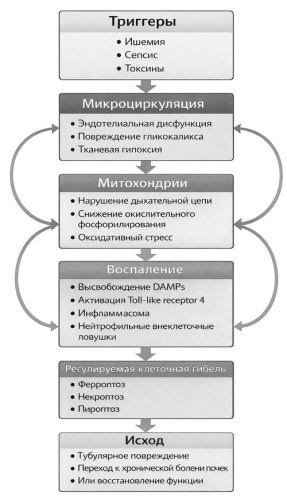
Acute kidney injury (AKI) consistently ranks as one of the leading causes of adverse outcomes among hospitalized and critically ill patients, regardless of advances in diagnosis and intensive care. While conventional views of AKI pathogenesis are primarily based on the ischemia-reperfusion model, they cannot fully explain clinical and biological heterogeneity of the condition. This review considers AKI a multisystem pathological process resulting from microcirculatory dysfunction, endothelial glycocalyx degradation, mitochondrial energy deficiency, immunoinflammatory mechanisms, and regulated cell death. The combination of these factors forms an interconnected pathogenetic network. Emerging evidence supports the systemic nature of this syndrome, driven by coordinated disturbances of the vascular compartment, cellular metabolism, and innate immune responses. Impaired microcirculation and glycocalyx degradation can lead to tissue hypoxia and inflammatory activation, even when macrovascular hemodynamics remain intact. Mitochondrial dysfunction in tubular epithelial cells results in energetic collapse, enhanced oxidative stress, and the release of damage-associated molecular patterns (DAMPs), thereby activating innate immunity. Regulated forms of cell death, including ferroptosis, necroptosis, and pyroptosis, play central roles in AKI pathogenesis, determining the extent of tissue injury, the magnitude of inflammation, and the likelihood of functional recovery. Together, these mechanisms clarify the phenotypic variability of AKI and the limited efficacy of therapeutic strategies focused solely on hemodynamic optimization. Viewing AKI as a multisystem process provides a rationale for the development of pathogenetically targeted and personalized therapeutic approaches.
Modern methods for diagnosing erectile dysfunction (ED) include wide-ranging questionnaires and diagnostic tests designed to assess the vascular, neurogenic, and functional aspects of sexual function. Since their introduction, specialized questionnaires have not undergone any significant changes. However, questionnaires based on ordinal scales do not currently yield reproducible results when used to assess patients. Thus, critical analysis of the applicability of the latest diagnostic tools for erectile dysfunction in clinical practice is required for their development and implementation. For instance, the growing number of older patients presenting with symptoms of both benign prostatic hyperplasia and ED is an increasingly pressing issue. Given this, research into the neurophysiological basis of these conditions and the development of new diagnostic, testing, and evaluation methods for ongoing therapy are of particular interest. A comparative analysis of the advantages and limitations of each diagnostic method was conducted, considering their applicability to patients with benign prostatic hyperplasia. Key methodological issues and prospects for further developing ED diagnoses were identified. Conclusively, a comprehensive, interdisciplinary approach should be taken to assess sexual function.
Patients with rheumatoid arthritis (RA) are at an increased risk for invasive pneumococcal infections due to immune system characteristics related to the disease and its treatment. Treatment options include disease-modifying antirheumatic drugs, such as methotrexate (MTX), and anti-B-cell therapy drugs, such as rituximab (RTX). Therefore, vaccination holds significant preventive value. Previous studies indicate that RTX impairs the cellular and humoral response to PPV23 in patients with RA. In RA patients, MTX led to decreased vaccine-specific antibody response and functionality, reduced Th17 cell numbers, and blocked plasma cell activation and switched memory B cell activation following PCV13 administration. Due to its ability to suppress peripheral blood monocyte concentration, MTX may serve as a biomarker for identifying RA patients who will be resistant to PKV13.
ORIGINAL RESEARCHES
Objective: To assess the status of the matrix metalloproteinase (MMP) system in patients with severe community-acquired pneumonia (CAP) based on serum levels of MMP-2, MMP-7, and the MMP-9/TIMP-1 and MMP-9/TIMP-2 complexes, as well as to monitor these levels over time.
Materials and methods. An open-label observational comparative study was conducted. The main cohort included 55 patients with severe CAP. The control group consisted of ten normally healthy volunteers. Venous blood samples were collected on days 1, 3, 6, 9, and 12 (in the control group, a single sample was collected). Marker concentrations were determined using the ELISA method. Statistical analysis was performed using SPSS 25.0.
Results. Dynamic monitoring revealed no clear, single-directional dynamics for the MMP-2 and MMP-9/TIMP complexes. However, MMP-7 levels decreased by day 3 and subsequently increased. This may correspond to a shift between the inflammatory and reparative phases during the fluctuating progression of severe CAP.
Conclusion. Serum MMP-7 levels are a promising marker of CAP severity; their dynamics correlate with early protease-dependent remodeling and worsening lung barrier dysfunction.
Training highly qualified medical professionals for the Far East region is a key government priority. The quality of any education depends on a variety of internal and external factors, including motivation. Meanwhile, students' motivation level depends on their health status. Thus, this study aims to assess how students' health impacts the quality of education and their internal and external motivation to learn at medical universities in the Far East.
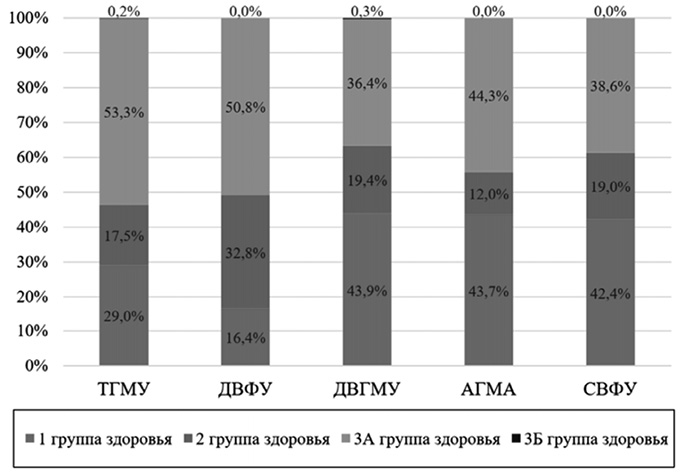
Materials and methods. As part of the Far Eastern educational, scientific, and industrial cluster, the following institutions participated in the study: Far Eastern State Medical University (FESMU), Amur State Medical Academy (ASMA), M.K. Ammosov North Eastern Federal University (NEFU), and Far Eastern Federal University (FEFU). A total of 1,697 students, aged 18 to 24, who study medicine were included in the study. A comprehensive health assessment included measuring body weight and height to determine BMI, checking blood pressure, and measuring total cholesterol and glucose levels. Additionally, subjective assessments and quality-of-life evaluations were conducted using questionnaires, particularly the short form of the MOS SF-12. The assessment covered physical status, encompassing physical activity, role functioning, bodily pain, and general health, as well as psychological status, covering resilience, social activity, emotional functioning, and psychological well-being. The motivation level was assessed using the questionnaire developed by T.O. Gordeeva, O.A. Sychev, and E.N. Osin (2014). Characteristic frequency was calculated as a percentage. Data from the study was used to create simple, group, and contingency tables, which revealed relationships between three or more variables. The mode, median, and arithmetic mean were calculated. The mean values were then compared across groups using a Student’s t-test. Results. The study revealed that 49.1% of students are classified as Health Group II. NEFU has the healthiest students, 22.1% of whom are classified as Health Group I. In contrast, students classified as Health Group III are 1.3 times more common at FEFU than at other universities in the Far East. A correlation was found between the levels of internal and external motivation and the students’ health status. Among students in Health Group III, significant cognitive motivation (Group III B, p = 0.55) was observed, as well as strong, practically absolute (p = 0.9) external motivation and high achievement motivation. Conclusion. The health of a student directly affects their internal and external motivation to learn.
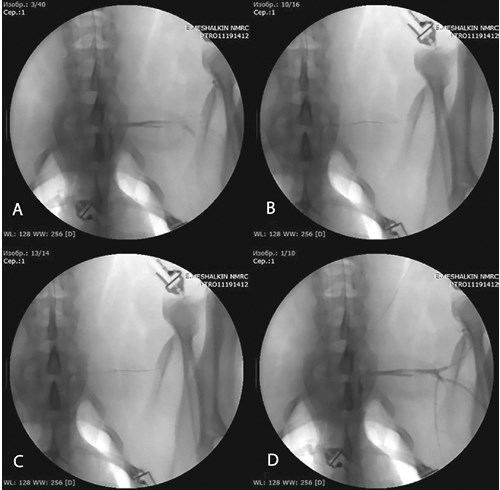
Objective: To evaluate the efficacy and safety profile of the Grasper stent retriever, manufactured in Russia, in a preclinical model of large intracranial vessel occlusion. Furthermore, to determine the impact of clot phenotype and procedural burden on thrombectomy outcomes.
Materials and methods. The study was conducted in vivo on 14 pigs, resulting in 41 episodes of occlusion. Three morphotypes of autologous clots were tested, including red, mixed, and white. Reperfusion was assessed using an adapted TICI (aTICI) scale. First pass effect (FPE) was defined as achieving aTICI 2c-3 after the first pass. Number of passes, puncture-to-reperfusion time, embolization to new territories (ENT), and angiographic vessel injury were analyzed.
Results. FPE (aTICI 2c-3) was achieved in 51.2% of cases. Final successful reperfusion (aTICI 2b-3) was obtained in 100%, with aTICI 2c-3 in 92.7%. No perforations, contrast extravasation, or mortality occurred; dissections (4.9%) were associated with ≥ 4 passes. ENT was observed in 24.4% and was more frequent with ≥ 3 passes (40.0 vs 15.4%). Outcomes were clot-dependent: FPE reached 71.4% for red clots (mean 1.79 passes) versus 23.1% for white clots (3.31 passes; p < 0.05).
Conclusion. The Grasper stent retriever demonstrated high recanalization efficacy with a favorable safety profile. Procedural burden is a key mediator of embolic and vascular complications. The clot phenotype influences the first pass effect and thus should be considered when selecting an initial thrombectomy strategy.
Objective: To develop machine learning (ML) models for assessing the pretest probability of intact coronary arteries (CA) in patients with non–ST-segment elevation myocardial infarction (NSTEMI).
Materials and methods. A single-center prospective study included 257 patients with NSTEMI who underwent invasive coronary angiography (ICA). Clinical and demographic characteristics, laboratory data, electrocardiogram and echocardiogram results were analyzed. ML methods, including multivariate logistic regression and stratified 10-fold cross-validation, were used to develop predictive models for pre-test diagnosis of intact CA.
Results. ICA revealed intact CA in 13.2% of patients. A multivariate logistic regression-based ML model exhibited the highest prognostic accuracy (AUC = 0.87), with the following predictors: age, low-density lipoprotein cholesterol, aortic root diameter, total protein concentration, total bilirubin, blood monocyte count, ST-segment depression, and fibrinogen level.
Conclusion. Using multifactorial ML models improves the accuracy of the pretest diagnosis of intact CA in patients with NSTEMI. Thus, personalized treatment strategies can be selected for patients with this disease phenotype.
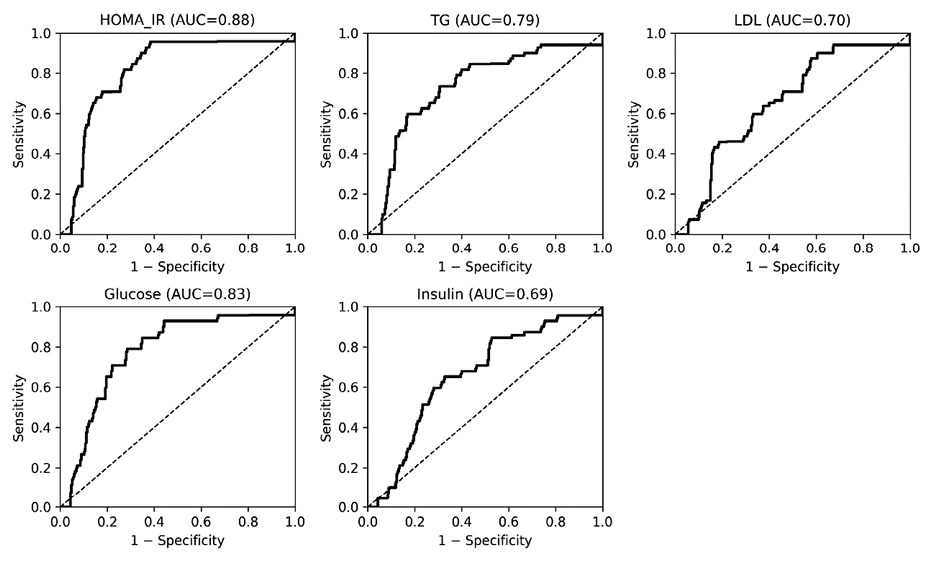
Objective: Modern To evaluate clinical and metabolic risk factors for significant liver fibrosis in patients with metabolic syndrome.
Materials and methods. A single-center, observational, cross-sectional study was conducted. Clinical and laboratory examinations, including glucose, lipid profile, transaminases, insulin, and HOMA-IR, as well as transient elastography, were performed. Clinically significant fibrosis was defined as ≥ F2, and advanced fibrosis as ≥ F3. Nonparametric methods and ROC analysis were used to assess the diagnostic significance of metabolic parameters in detecting ≥ F3.
Results. The frequency and severity of liver fibrosis increased as metabolic status worsened, particularly when type 2 diabetes mellitus (T2DM) was present: in the MetS + T2DM group, ≥ F2 fibrosis was detected in 76.2% of patients, and F3–F4 fibrosis in 49.3%. Among metabolic markers, HOMA-IR showed the highest discriminative ability for ≥ F3 (AUC = 0.88), followed by glucose (AUC = 0.83) and triglycerides (AUC = 0.79).
Conclusion. In patients with metabolic syndrome, insulin resistance and associated metabolic abnormalities can be linked to advanced stages of liver fibrosis. Transient elastography, when used in conjunction with routine metabolic markers, can identify high-risk patients.
Stress echocardiography (Stress-ECHOCG) is a noninvasive method for diagnosing coronary artery disease (CAD) that allows for the detection of transient abnormalities in local contractility during exercise. Objective: To evaluate the role of stress echocardiography in diagnosing stable coronary artery disease (CAD) compared to invasive coronary angiography (ICA). Materials and methods. Stress-ECHOCG was performed on 34 patients with suspected CAD at the Functional Diagnostics Department of Vladivostok Clinical Hospital No 1. The Stress-ECHOCG results were then compared with those of ICA. Results. The sensitivity of stress echocardiography was 96.8%, and the positive predictive value was 90.9%. A positive stress echocardiogram was associated with stenoses in the basins of the anterior descending artery (r = 0.91), the circumflex artery (r = 0.89), and the right coronary artery (r = 0.91). Conclusion. Stress echocardiography plays a crucial role in the diagnostic algorithm for coronary artery disease, offering high accuracy and safety. Using stress echocardiography helps optimize patient selection for invasive testing and reduces the number of unnecessary coronary angiograms.
PRACTICE OBSERVATIONS
Peripartum cardiomyopathy (PPCM) is a rare heart muscle disease that affects women during the last month of pregnancy or within five months after childbirth. The disease manifests as acute and/or chronic heart failure (CHF). In addition to standard CHF therapy, PPCM treatment includes bromocriptine, which blocks the production of anti-angiogenic 16kDa low-molecular-weight prolactin. This prolactin plays an important role in PPCM pathogenesis. Although effective treatments are available, some aspects of managing this condition remain unresolved, ranging from epidemiology to treatment duration. This article presents a clinical case report of a patient with PCMP and details the monitoring of her clinical, instrumental, and laboratory data over a 15-month period.
This article examines current treatment strategies for non-parasitic (bacterial) hepatic abscesses, focusing on minimally invasive techniques. The effectiveness of ultrasound-guided percutaneous procedures, including puncture and drainage, has been demonstrated through a literature analysis and our clinical experience (22 cases in 2025). Furthermore, the article presents data on the etiology, diagnosis, and treatment selection algorithms for this condition, as well as the technical aspects of interventions and the outcomes of their application. The increasing incidence of this condition emphasizes the importance of implementing standardized protocols for minimally invasive treatment.
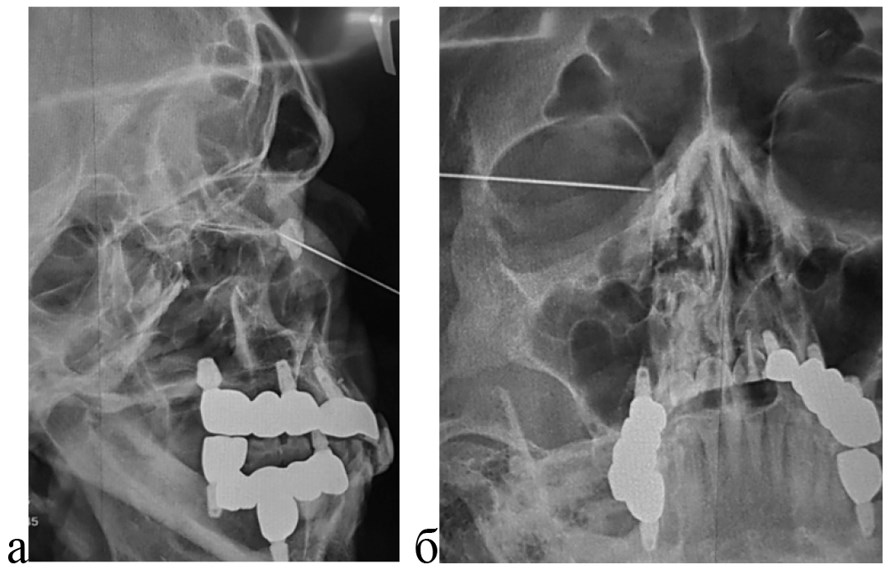
This article presents a clinical case study of the surgical endoscopic treatment of chronic lacrimal sac and nasolacrimal duct inflammation. Current advancements in endoscopic technology and surgical techniques allow surgeons to perform these procedures through the nasal cavity, opening the lacrimal sac and restoring tear drainage in a nearly physiological manner. A differential diagnosis is performed by an ophthalmologist who selects patients while taking into account all clinical manifestations, anatomical features, and results of instrumental examinations. This article outlines the steps of the procedure and the subsequent conservative treatment strategy for alleviating inflammation and restoring the function of the lacrimal sac. The preoperative evaluation includes injecting contrast dye into the lacrimal drainage system, which allows for simple, noninvasive visualization of the level of obstruction. Furthermore, two-projection radiography with contrast is noted for its importance and advantages in making an accurate diagnosis and determining the indications for surgical treatment.
Current clinical guidelines emphasize the need for early risk stratification in patients with non-ST-segment elevation acute coronary syndrome (NSTE-ACS). Meanwhile, the choice between invasive and conservative strategies for patients at low risk for adverse outcomes remains challenging. Our predictive model, developed using stochastic gradient boosting, highly accurately assesses the probability of obstructive coronary artery disease in the first hours of hospitalization. Data from three time points are sequentially integrated: the initial examination, one hour later (complete blood count), and three hours later (biochemistry and echocardiography). This article presents a clinical case that illustrates the practical application of the model.
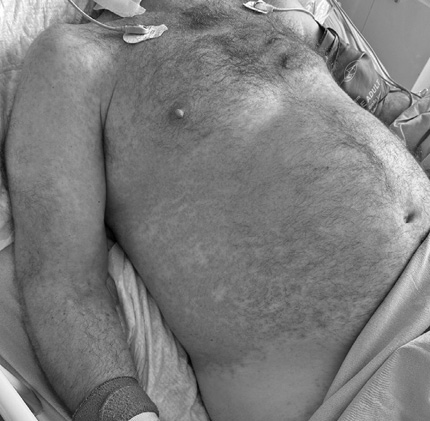
This article presents a clinical case report of a 49-year-old male patient with severe community-acquired bilateral polysegmental pneumonia, complicated by sepsis and multiple organ failure including acute kidney injury (AKI) with oliguria, severe hyperbilirubinemia, and thrombocytopenia with suspected thrombotic microangiopathy (TMA). Objective: To demonstrate strategies for the differential diagnosis of TMA in severe pneumonia and the sequential use of extracorporeal therapies (ECT). Severity was assessed using the SOFA score. Renal replacement therapy (RRT) was performed as continuous veno-venous hemofiltration (CVVH) in three intervals. Therapeutic plasma exchange (TPE) consisted of two sessions, each involving two volumes of circulating plasma. Prior to ECT, a blood sample was collected to measure ADAMTS13 activity. In the context of complex therapy involving CVVH and TPE, the SOFA score decreased from 12 to 7 points. Additionally, the platelet count increased from 30 × 10⁹/L to 187 × 10⁹/L, bilirubin levels decreased from 559.6 to 16.6 μmol/L, and diuresis was restored. However, ADAMTS13 activity was only 19%, which requires further interpretation considering the presence of sepsis. This case highlights the importance of early TMA diagnosis, ADAMTS13 blood testing before ECT, and the effectiveness of early plasmapherapy.
GUIDELINES FOR PRACTITIONERES
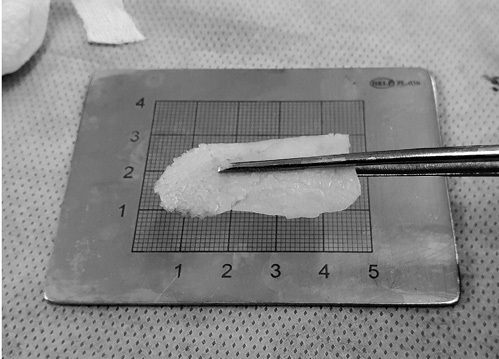
Forming a smooth nasal bridge at the final stage of rhinoplasty is one of the key aspects of the surgical procedure. This article presents a method for reconstructing the nasal bridge after septorhinoplasty. This patented method involves harvesting quadrangular cartilage and processing it in a crusher to alter its elastic properties. The graft is then placed on the bony and cartilaginous sections of the nasal bridge and secured with sutures at four points. Although this method is technically rather simple, it is an effective approach for widening the bridge of the nose. Furthermore, it helps reduce the risk of side effects and complications while achieving long-lasting cosmetic and aesthetic results.
ANNIVERSARIES