


REVIEWS
Augmented reality (AR) technologies present a promising approach to modern abdominal surgery as they provide virtual, 3D models of anatomical structures overlaid on the actual surgical field. A literature review of the past five years revealed significant advances in using AR in liver and pancreatic surgeries due to its effectiveness in reducing intraoperative blood loss, blood transfusion frequency, and hospital stay length. Clinical studies confirm not only the safety of the method, but also its potential to increase the extent of oncological resections. Technical limitations and the need for standardization notwithstanding, augmented reality shows great promise in improving intraoperative navigation, reducing cognitive load on surgeons, and enhancing the precision of complex surgical procedures. The further development of AR technology involves integration with artificial intelligence and robotic systems.
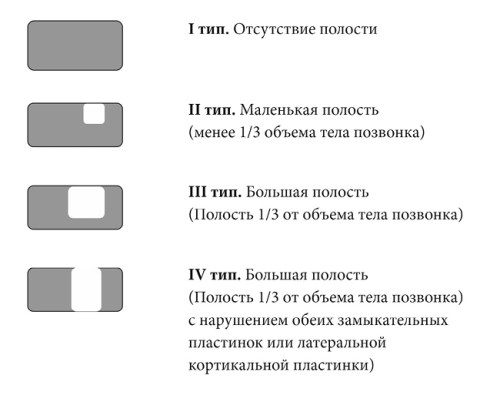
This article aims to systematically review Russian and foreign scientific studies on optimizing treatment for patients with spinal cord injury (SCI) by completely or partially removing transpedicular screw fixation after fracture healing. Several initial characteristics were examined, including the number of patients, their gender and age, fracture level and type according to the AO Spine classification, time from internal fixation placement to removal, Cobb angle, height of the fractured vertebra, range of motion in the previously immobilized segment, as well as the presence of a control group without transpedicular screw removal. Additionally, quality-of-life indicators were analyzed throughout the entire follow-up period. The results indicate that patients who underwent surgical removal of a rigid metal implant experienced an improvement in their quality of life. Meanwhile, patients who do not have their metal implants removed are at risk of developing adjacent segment syndrome and experiencing failure of the fixation system components in the future. However, the timely removal of the implant completing the transpedicular screw fixation process can prevent these risks.
Objective: To review available data on the impact of extracurricular activities (ECA) on the health of medical university students and identify areas for further research Materials and methods. An analytical review of Russian and international publications from 2020 to 2025 was conducted, focusing on various types of extracurricular activities for students, including physical, volunteer, research, cultural, creative, and tutoring activities. A total of 64 sources were analyzed, and 42 were included in the review. These studies examined the effects of extracurricular activities on students’ physical, psychological, and social well-being. Results. The study found that students who participate in extracurricular activities experience improved physical and mental health, and develop stress resilience, leadership, and communication skills. Student involvement in extracurricular activities also correlates with higher academic performance and greater satisfaction with education. In particular, sports and dance activities improve physical fitness and reduce anxiety levels, while participation in volunteer and academic communities enhances social adjustment and subjective well-being. However, due to their descriptive nature and reliance on self-reports, most studies are limited in their objectivity. Thus, further longitudinal studies using validated scales should be conducted. Conclusion. Extracurricular activities among medical university students contribute significantly to health protection and professional development, fostering a health-promoting educational environment, thereby fostering a health-promoting educational environment. The obtained data can serve as a basis for developing preventive and organizational hygiene measures aimed at maintaining students’ psychophysiological well-being.
This study reviews previous research on current approaches to treating patients with optic nerve drusen. While the etiopathogenesis of this condition remains unclear, its multifactorial nature and connection to numerous systemic, congenital, and genetically determined conditions have been established. Optic nerve drusen manifest clinically in a wide range of ways, from no symptoms to significant visual impairment due to direct axonal and vasocompression by the drusen material. In cases where visual examination fails to provide a diagnosis, modern physicians utilize high-resolution imaging techniques, such as ultrasonography and spectral optical coherence tomography with an enhanced depth imaging module, ensuring an accurate diagnosis. Although preventive and therapeutic approaches have been developed for managing patients with optic disc drusen, they have not yet been established as reliable guidelines. Meanwhile, the ongoing debate about the relationship between glaucomatous optic neuropathy and optic disc drusen has revealed a direct correlation between ocular hypertension and worsening of the perimeter. Thus, further fundamental research into the etiopathogenesis of optic disc drusen is required.
This study examines the occupational risks of developing vibration-induced disease (VIB) among dentists. The main sources of vibration during dental procedures are analyzed, including high-speed turbine handpieces, ultrasonic scalers, and other vibrating instruments. The pathogenetic mechanisms underlying vibration-induced disease, the clinical manifestations observed in dentists, and the methods for diagnosing and preventing this condition are discussed. According to data from published studies, dentists' professional activities involve constant exposure to local vibration, which increases the risk of vascular, neurological, and musculoskeletal disorders. A comprehensive analysis of occupational risks enables the development of effective measures for preserving the health of medical personnel and preventing occupational diseases. demonstrated efficacy competitive with two reference stent retrievers.
ORIGINAL RESEARCHES
Objective: To evaluate the efficacy and embolic profile of the Grasper stent retriever, as well as various mechanical thrombectomy strategies, in a standardized in vitro bench model; to identify independent predictors of first-pass effect (FPE) and distal embolization. Materials and methods. A pulsating flow-loop system with four anatomical configurations was employed. Three types of blood clots were simulated, involving erythrocyte-rich, mixed, and fibrin-rich. A total of 288 tests (144 scenarios) were performed. Assessment included FPE, final reperfusion, number of passes, time to reperfusion, device–clot integration, and distal embolization. Statistical analysis was performed using the chi-square test, the Kruskal–Wallis test, and multiple regression analysis. Results. The FPE rates were 60.4%, 56.2%, and 54.2%, respectively, for the three devices compared (p = 0.82). The stent retriever showed superior device–clot integration, with no cases of failure to integrate (p < 0.001). FPE correlated with integration quality (p = 0.001). At the strategy level, FPE was achieved in 64.6% of cases. The combined technique resulted in the lowest embolic burden, as opposed to the aspiration-first strategy, which increased it (p < 0.001). The presence of a fibrin-rich clot reduced the probability of FPE (OR 0.24; p < 0.001). Conclusion. In the in vitro model, the Grasper stent retriever demonstrated efficacy competitive with two reference stent retrievers.
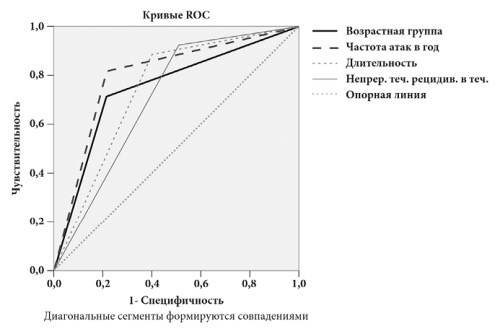
Objective: To investigate indicators of arterial stiffness and subclinical atherosclerosis in patients with ulcerative colitis (UC) in the Zabaykalsky Krai, as well as to develop prognostic criteria for the early development of atherosclerosis in these patients. Materials and methods. Data obtained from the patient registry at the Chita Regional Clinical Hospital for patients with inflammatory bowel disease (IBD) were analyzed. This retrospective study included 70 patients aged 20–50 with ulcerative colitis that had lasted more than one year. The control group consisted of 50 healthy volunteers matched for age and sex. All participants underwent 24-hour blood pressure monitoring with arterial stiffness analysis using the BPLabWin device (Petr Telegin LLC, Nizhny Novgorod, Russia) with Vasotens software. Ultrasound examinations of the carotid and femoral arteries were performed using a focused protocol on a Vivid S60N device (USA/China). The data were statistically analyzed using the IBM SPSS Statistics Version 25.0 software package. Results. Increased arterial stiffness was observed in 73% of patients with ulcerative colitis, which is 2.8 times higher than in the control group (p < 0.05). Subclinical atherosclerosis manifestations were 5 times more common in patients with ulcerative colitis compared to the control group (p < 0.05). Early predictors of atherosclerosis were identified, including age 41–50 years, UC clinical duration more than 3 years, and a continuous or recurrent course of IBD with a frequency of attacks more than twice per year. Conclusion. Subclinical atherosclerosis is more commonly detected in young patients with ulcerative colitis, which impacts cardiovascular risk. Preventing atherosclerosis in these patients involves screening high-risk groups for vascular disease, intensifying anti-inflammatory therapy, and achieving remission of inflammatory bowel disease.
Objective: To analyze the treatment outcomes for acute surgical conditions of the abdominal organs in the Amur Region from 2020 to 2024. Materials and methods. Data from the surgical service of the Amur Region for 2020–2024 were used, covering 15,920 patients with acute appendicitis, acute cholecystitis, acute pancreatitis, acute intestinal obstruction, peptic ulcer bleeding, perforated peptic ulcer, and incarcerated hernia. Results. From 2020 to 2024, 28.01% of cases were acute appendicitis, 24.59% were acute pancreatitis, 18.62% for acute cholecystitis, 12.87% for acute intestinal obstruction, 7.61% for peptic bleeding, 3.9% for perforated ulcers, and 4.4% for incarcerated hernias out of the total number of patients (15,920). In 2024, acute pancreatitis (28.14%) was the leading cause of hospitalization among admitted patients (3,572), followed by acute appendicitis (22.56%) in the second place and acute cholecystitis (18.73%) in the third place. Surgery was most commonly performed for appendicitis (46.95%). The highest mortality rates were observed in cases of perforated ulcers (15.78%), peptic bleeding (10.9%), and acute intestinal obstruction (10.3%). Among patients, 48.16% were admitted more than 24 hours after the onset of symptoms, and the mortality rate doubled. Laparoscopic surgeries accounted for 27.44% of all procedures. Conclusion. Therefore, to integrate theoretical knowledge with practical application more effectively, it is advisable to schedule the study The incidence of acute surgical conditions of the abdominal organs in the Amur Region aligns with rates observed in the Far Eastern Federal District and the Russian Federation. Delayed hospitalization of patients, defined as more than 24 hours, is associated with complications and increased mortality. Proposed organizational measures aim to improve the provision of emergency surgical care.
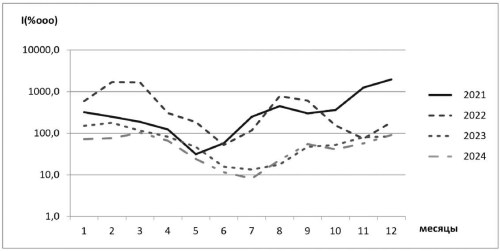
Objective: To establish the epidemiological patterns of novel coronavirus infection (NCVI) that emerged in Primorsky Krai from 2020 to 2024 and use these patterns to create a forecast. Materials and methods. Data from the state statistical report “Information on Infectious and Parasitic Diseases”(Form No. 2, monthly and annual) for Primorsky Krai was used. Morbidity, mortality, and fatality rates were analyzed across Primorsky Krai's administrative territories. The conditions of infection were studied based on epidemiological history collections and epidemic focus examinations. Results. The epidemic spread of NKVI in Primorsky Krai began with a winter-spring surge in 2020–2021. A summer peak emerged in June, leading to fall-winter and winter-spring epidemic waves. In 2021, pneumonia cases accounted for 15.0% of all cases, decreasing to 4.1%–5.2% in subsequent years. Among individuals over 18 years of age, the risk of contracting NCVI increased with age. Conversely, children under one year of age were at the highest risk. The incidence rate decreased with age. In Primorsky Krai, an uneven distribution of incidence rates was observed among regions, with cities tending toward median values. Elderly individuals accounted for the largest proportion of fatalities from the virus, at 53.4%. There were no reported fatalities in 2023 or 2024. Conclusion. NKVI manifested as a recurrent disease. Its age distribution was similar to that of tuberculosis during the initial immunization period. The epidemic spread throughout Primorsky Krai, and even the lowest estimated incidence rates are relatively high. In 2023–2024, seasonality in NCVI was weak. However, a combination of these factors indicates the potential for NCVI to become a chronic disease primarily transmitted by aerosols.
Introduction. This article explores factors contributing to the incidence of neoplasms in the kidneys and bladder among employees of medical institutions. These factors include the impact of occupational environment, working conditions, genetic predisposition, and individual lifestyles. Existing models of programs for the early detection of bladder and kidney tumors were reviewed, and a model for the early diagnosis of these urinary tract pathologies was proposed considering the occupational group characteristics and risk factors for developing pathology, both benign and malignant, among medical institution employees. Objectives. To investigate the prevalence of urinary system neoplasms among medical institution employees in Primorsky Krai. Materials and methods. The research covered the period from 2013 to 2024 and used data on medical institution workers with malignant neoplasms from administrative information systems, such as the Primorsky Krai Cancer Registry and the Primorsky Krai Oncology Dispensary. Descriptive statistics were used to process the data. Results. Despite the availability of technologies for precancerous diagnosis and the oncological awareness of the medical community, the early detection of neoplasms, particularly malignant ones, has not increased among high-risk groups of healthcare workers. The development of pathology among medical personnel can be caused by chemical and biological factors, stressful working conditions, inadequate drinking regimens, and the chemical composition of the water. Conclusion. Less-studied factors of the working environment of medical institutions that serve as risk factors for the development of oncopathology among medical workers are examined and systematized; preventive measures are suggested.
Objective. Analysis of expert reports on the cases of improper medical care for children under 18 years of age. Identification of specific features of such activities and organization of expert commissions with the purpose of practical application of the information obtained. Materials and methods. Expert reports provided by the Tatarstan Republican Bureau of Forensic Medical Examination were used. The data under analysis included 131 postmortem examinations and 95 examinations of living persons during the 2013–2021 period, as well as the following information: the profiles of specialists who participated in the work of expert commissions, the number of specialists involved (one or several), their qualifications and scientific degree. Data processing was carried out using the Microsoft Excel 2007, Microsoft Excel 365, and JASP 0.19.2.0 software packages. The normality of distribution was assessed by the Shapiro–Wilk criterion; the differences were considered statistically significant at p < 0.05. Results. The conducted statistical analysis revealed specific features in the composition of expert commissions. Both in postmortem examinations and examinations of living persons, the expert commission included, on average, four specialists of the highest category and those holding the degree of Candidate of Medical Sciences. When conducting postmortem examinations, specialists in infectious diseases, neonatology, anesthesiology, and resuscitation were involved most commonly. When conducting examinations of living persons, neurologists and traumatologists were in demand most frequently. Conclusion. Specific features of the organization of expert commissions in the conduct of forensic and medico-legal examinations in cases of pediatric medical malpractice have been identified. The range of specialists most frequently involved in such examinations has been determined. Recommendations on the selection and involvement of clinical specialists have been proposed.
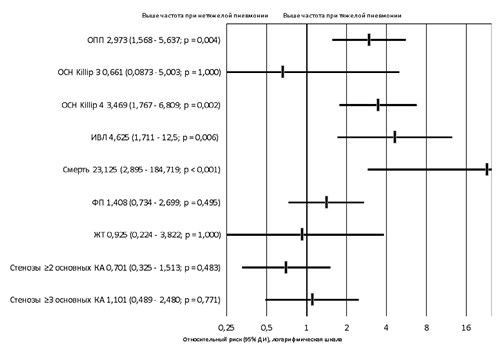
Objective: To evaluate the impact of the severity of community-acquired pneumonia (CAP) on the clinical and functional characteristics, course, and outcomes of acute coronary syndrome that developed in the context of CAP. Materials and methods. A retrospective observational study with a case-control design element was conducted on 90 patients with acute coronary syndrome (ACS) and a history of CAP. Results. Regression analysis models revealed that hypoxemia (SpO2 <90%), fibrinogen, troponin T, hemoglobin, and blood platelet levels, in combination with pneumonia severity and serum C-reactive protein (CRP), significantly impact tricuspid regurgitant jet velocity (TRJV), explaining 83.5% of its variability. The risk of paroxysmal atrial fibrillation increased with higher TRJV, greater pneumonia severity, and diuretic use. Conclusion. In patients with ACS combined with CAP, the role of hypoxemia and biological markers of inflammation in the development of right ventricular heart failure and paroxysmal atrial fibrillation has been established.
PRACTICE OBSERVATIONS
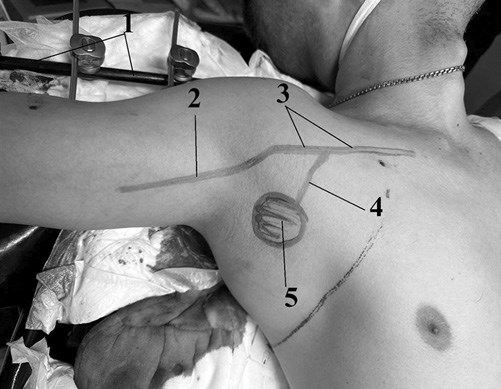
This article presents a clinical case of the successful treatment of a 35-year-old military serviceman who sustained combined shrapnel wounds to the chest and right upper limb in the zone of the Special Military Operation. The patient was diagnosed with a non-penetrating chest wound and a penetrating shoulder wound accompanied by a comminuted fracture. The patient also had an injury to the subscapular artery with a pulsating hematoma and a subclavian vein injury, the latter of which was detected during surgery. A single-stage surgical procedure was performed at a Level 2 field hospital. This procedure included surgical debridement, osteosynthesis of the shoulder fracture using a rod system, and vascular reconstruction. The vein and artery defects were closed using 6/0 sutures. The two-hour surgery resulted in 30 ml of blood loss. Postoperative recovery proceeded without complications, and the patient was evacuated for further treatment. Thus, this case demonstrates that complex vascular procedures can be performed effectively and safely during the early stages of medical evacuation in a conflict zone.
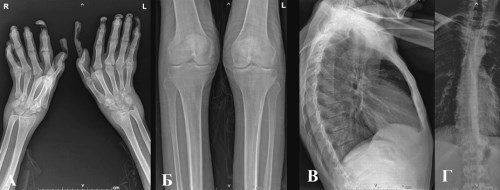
This article presents a clinical case of psoriatic arthritis (PsA). Its focus is on the efficacy of risankizumab (RIS), an IL-23 inhibitor, in treating a patient with highly active PsA who did not respond to standard therapy. It was demonstrated that RIS is highly effective through the clinical remission of skin manifestations and a significant reduction in arthritis activity. Thus, these results confirm the importance of biological therapy and the treat-to-target strategy.
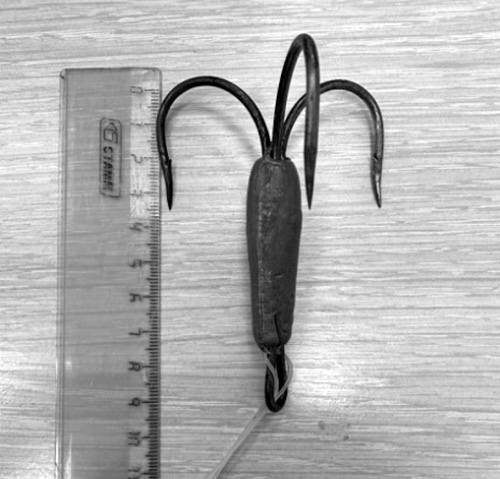
Objectives. To evaluate the impact of eye injuries caused by fishing hooks on patients’ visual function and quality of life. Materials and methods. A clinical case study presents the observation of a 27-year-old patient with a rare, severe ophthalmological injury caused by an anchor-shaped fishing hook measuring more than 10 cm. The hook has three-headed teeth, with a diameter of 3 mm each. Results. Some improvement in vision has been observed in the left eye, with the ability to count fingers at a distance of 10 cm. Previously, the visual acuity was 1/& pr.l.inсertae. However, the left eye exhibits a clinical picture of post-traumatic keratouveitis. The patient is undergoing anti-inflammatory therapy and dynamic observation. Conclusion. A case of severe eye injury with extensive tissue damage and significant foreign body contamination revealed the inevitable sharp deterioration of vision, regardless of surgical intervention at a specialized microsurgical center with highly qualified medical care. The patient required long-term treatment, including conservative therapy, ongoing medical monitoring, and rehabilitation procedures. This underscores the severity of such injuries and the necessity of a comprehensive treatment approach to minimize negative outcomes.
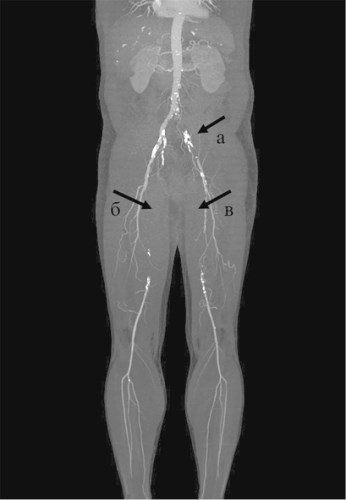
This article presents a clinical case study of the successful surgical treatment of a patient with critical lower-limb ischemia and gastric adenocarcinoma. As noted, an early diagnosis allows for a more accurate prediction of complications during the post-operative period, and thus, the selection of the optimal surgical treatment method. Bypass surgery for multi-stage arterial lesions, including those of the aorto-femoral segment, is described. For patients with concomitant oncopathology, this method provides an alternative to surgical access to the abdominal cavity.
PEDAGOGY
Contemporary medical practice requires highly trained specialists proficient in topographical and anatomical knowledge, clinical reasoning, and manual skills. A proper understanding of these aspects is critical for future practitioners, as knowledge of anatomical structures and their relative positions directly impacts the safety of medical procedures. Furthermore, the rapid advancements in medicine necessitates modernizing the educational process, including the course “Topographic Anatomy and Surgical Techniques.” Although traditional teaching methods, such as lectures and practical sessions with natural specimens, remain effective, they do not always adequately prepare students for real-world clinical practice. In particular, an integration of anatomical knowledge, clinical reasoning, and manual skills should be emphasized, which requires reevaluating approaches to organizing the educational process. Students in their second and third years of study often lack the necessary skills in clinical reasoning and spatial perception of anatomical structures, which is one of the challenges. Therefore, to integrate theoretical knowledge with practical application more effectively, it is advisable to schedule the study of topographic anatomy and operative surgery for the third and fourth years. By then, students will have acquired the fundamental knowledge of propaedeutics, radiological diagnostics, and surgery required for clinical work.


